
Upholstery Cleaning: What’s Really Hiding in Your Furniture
Your sofa, armchair, and cushions may look clean — but beneath the surface, they’re often hiding far more than you think.
Upholstery works like a sponge, absorbing dust, sweat, body oils, food particles, pet dander, pollen, and bacteria every single day. Over time, these soft fabrics become a perfect breeding ground for microbes and allergens that can affect your health, trigger allergies, and lower your indoor air quality.
Without regular professional cleaning, these hidden contaminants continue to build up, leaving your furniture looking dull, smelling stale, and becoming less hygienic for your family.
Germs and Allergens Found in Upholstery
Upholstered furniture in homes and workplaces across Ireland can harbour a range of microorganisms and allergens that pose health risks — especially when cleaning is infrequent. Here are the most common culprits, supported by Irish public health guidance:
Health Risks of Neglected Upholstery
- Respiratory issues from inhaling bacteria-laden dust
- Skin irritation from contact with contaminated fabric
- Gastrointestinal illness from lingering E. coli
- Unpleasant odours from microbial buildup
- Reduced indoor air quality as particles are released into the air
Tips for Keeping Upholstery Clean
- Vacuum Weekly
Use a soft brush attachment to remove dust, crumbs, and hair from cushions and seams. - Spot Clean Immediately
Blot spills with a clean cloth and use a fabric-safe cleaner. Never rub — it spreads the stain. - Rotate Cushions
Flipping cushions helps distribute wear and keeps them looking fresh. - Use Fabric Protectors
Apply a spray-on protector to repel stains and make future cleaning easier. - Steam Clean Seasonally
Deep clean every 3–6 months to remove embedded bacteria and allergens. - Check Cleaning Codes
Always follow the manufacturer’s label:
W = Water-based cleaner
S = Solvent-based cleaner
WS = Either
X = Vacuum only
Why Professional Cleaning Matters
DIY cleaning is helpful, but it only removes what’s sitting on the surface. Deep inside the fibres of your sofa and chairs, bacteria, dust mites, pollen, pet dander, and allergens continue to build up — and regular household products simply can’t reach them.
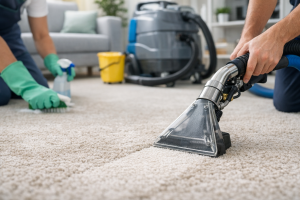
Professional upholstery cleaning goes far beyond what home cleaning can achieve. At Eco Cleaning, we use high‑temperature steam extraction and eco‑safe disinfectants to sanitise your furniture thoroughly. This process eliminates odours, kills bacteria, removes allergens, and tackles health risks right at the source, leaving your upholstery fresher, cleaner, and healthier.
We proudly serve Dundalk, Drogheda, Ardee, Blackrock, Carlingford, Dunleer, and all major towns across County Louth, providing professional, eco‑friendly cleaning solutions for homes and businesses.